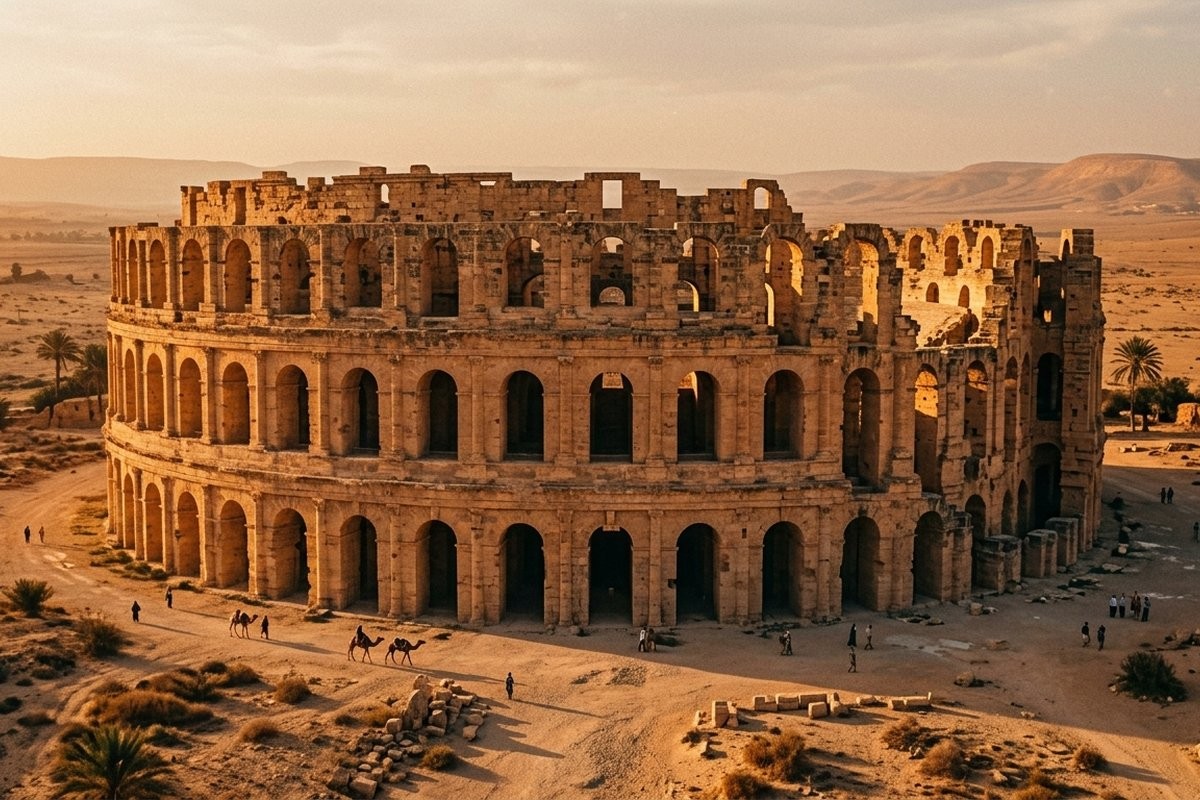
Founded in 670 AD by Arab general Uqba ibn Nafi, Kairouan is the historic spiritual capital of the Maghreb and a UNESCO World Heritage site. Located in the dry plains of central Tunisia, the city's ancient medina retains an authentic, unhurried rhythm far removed from coastal resort towns.
The Great Mosque of Sidi Uqba
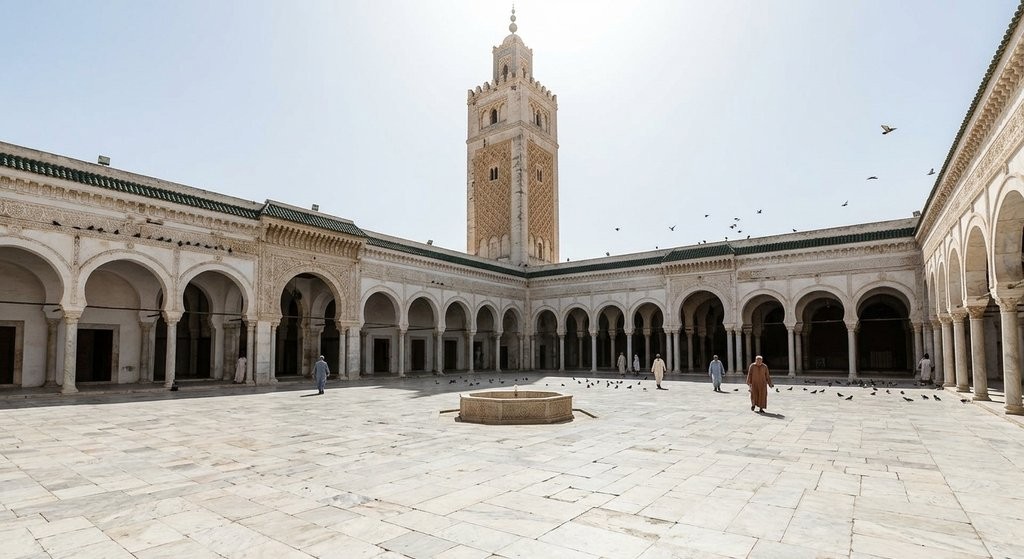
The centerpiece of Kairouan is the Great Mosque, one of the oldest and most influential monuments of Islamic architecture in North Africa. Its vast marble-paved courtyard is surrounded by double arcades supported by ancient Roman and Byzantine columns salvaged from the ruins of Carthage and Sbeitla.
The square minaret, rising in three stepped tiers, served as the architectural model for minarets throughout North Africa and Moorish Andalusia. Non-Muslim visitors can enter the courtyard and peer through carved wooden doors into the seventeen-aisle prayer hall.
Wandering the Medina Alleys and Bab el-Tounes
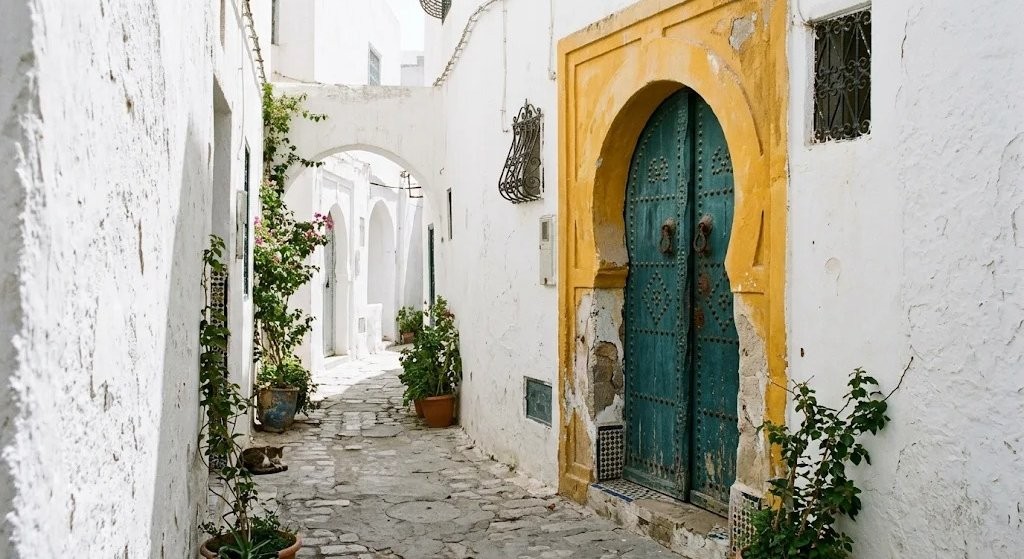
Leave the mosque through the northern gates and enter the quiet whitewashed alleys of the medina. Unlike Tunis, Kairouan's medina is largely residential, with painted wooden doors, turquoise window grilles, and carpet weavers working upright wooden looms in family workshops.
Visit the Mosque of the Three Doors (Mosquée des Trois Portes), remarkable for its rare ninth-century floral stone relief facade and Kufic inscription, then stop at a local sweetshop for fresh Makroudh—traditional semolina pastries stuffed with dates and soaked in wild orange honey.
The Aghlabid Basins and Zaouia of Sidi Amor Abbada
Just outside the northern city ramparts lie the Aghlabid Basins, a masterwork of ninth-century hydraulic engineering. These circular stone reservoirs, spanning over 120 meters in diameter, stored water channeled through aqueducts from the Cherichira mountains thirty kilometers away to supply the desert city.