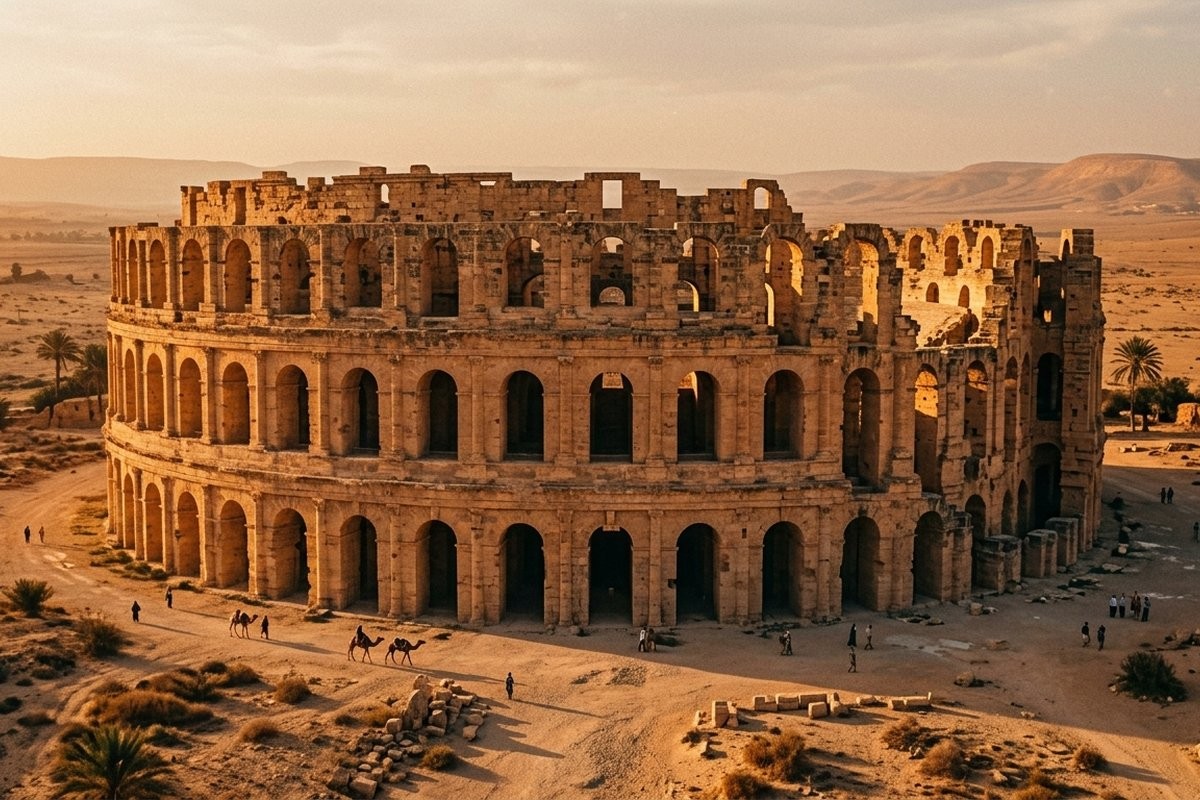
Rising abruptly out of the olive groves of the Sahel plain in central Tunisia, the Roman amphitheater of El Jem (ancient Thysdrus) is the third largest colosseum built in the Roman Empire, rivaling Rome's own arena in scale and surviving in superior architectural condition.
Exploring the Arena Floor and Gladiator Vaults
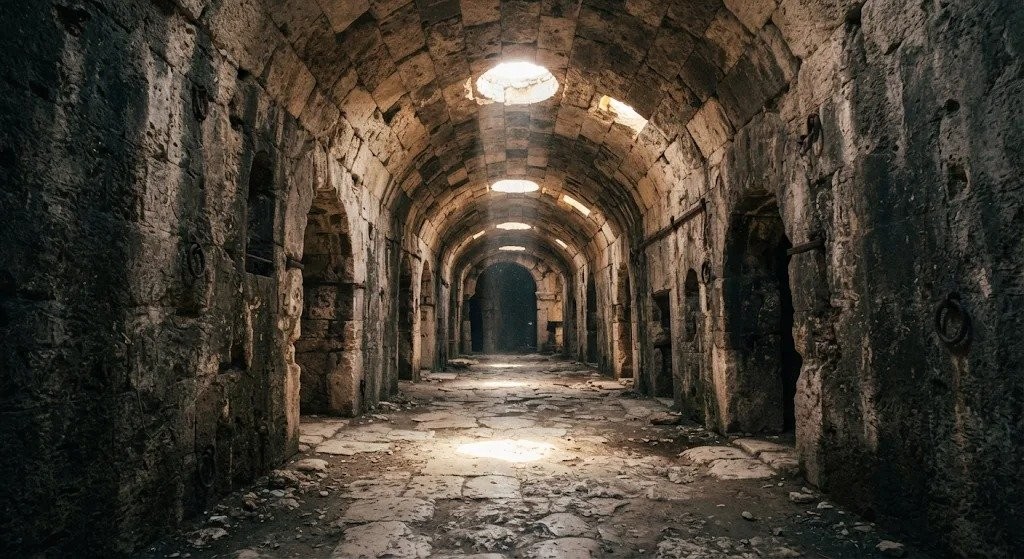
Constructed around 238 AD under proconsul Gordian I, the amphitheater could hold thirty-five thousand spectators. Unlike Rome's Colosseum, where the underground floor is mostly closed off, at El Jem visitors can descend directly into the long subterranean barrel-vaulted tunnel beneath the arena floor.
Here, stone animal cages and gladiator holding cells line both sides of the central corridor, complete with square ceiling openings where wild beasts were winched up into the arena during games.
Climbing the Upper Arcades
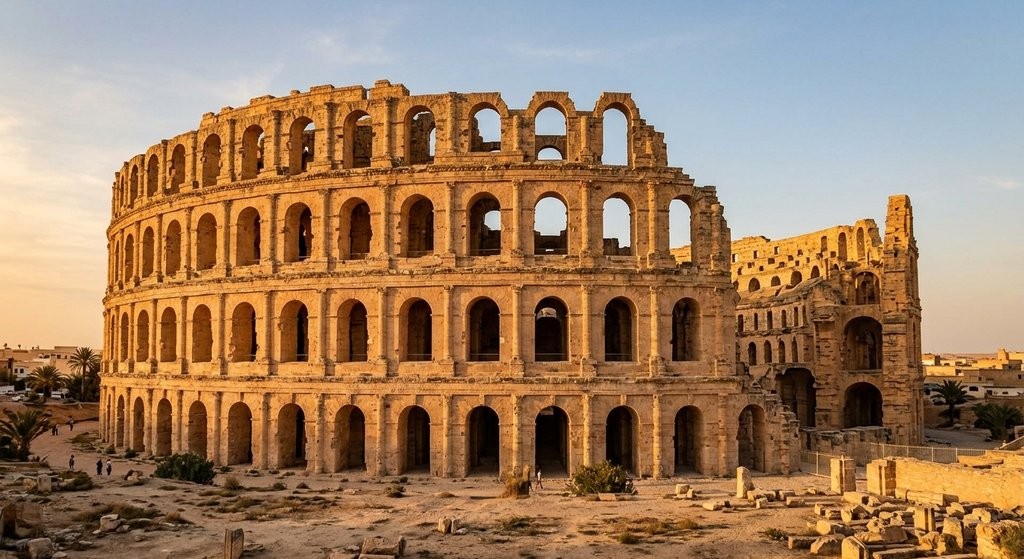
The outer facade of the colosseum rises thirty-six meters across three tiers of Corinthian and composite stone arcades. Stone staircases lead all the way up to the highest seating gallery, giving an aerial perspective over the elliptical arena floor and the flat tiled roofs of modern El Jem town.
Visit in the late afternoon when the warm North African sun turns the yellow sandstone blocks a deep amber gold and cast long shadows across the arena.
Train Connections from Sousse and Tunis
El Jem sits directly on the main coastal railway line connecting Tunis, Sousse and Sfax. Several daily express trains run from Sousse station (around one hour journey time) and drop you within a five-minute walk of the colosseum gates, making it one of the easiest ancient sites in Tunisia to explore without organized tour buses.