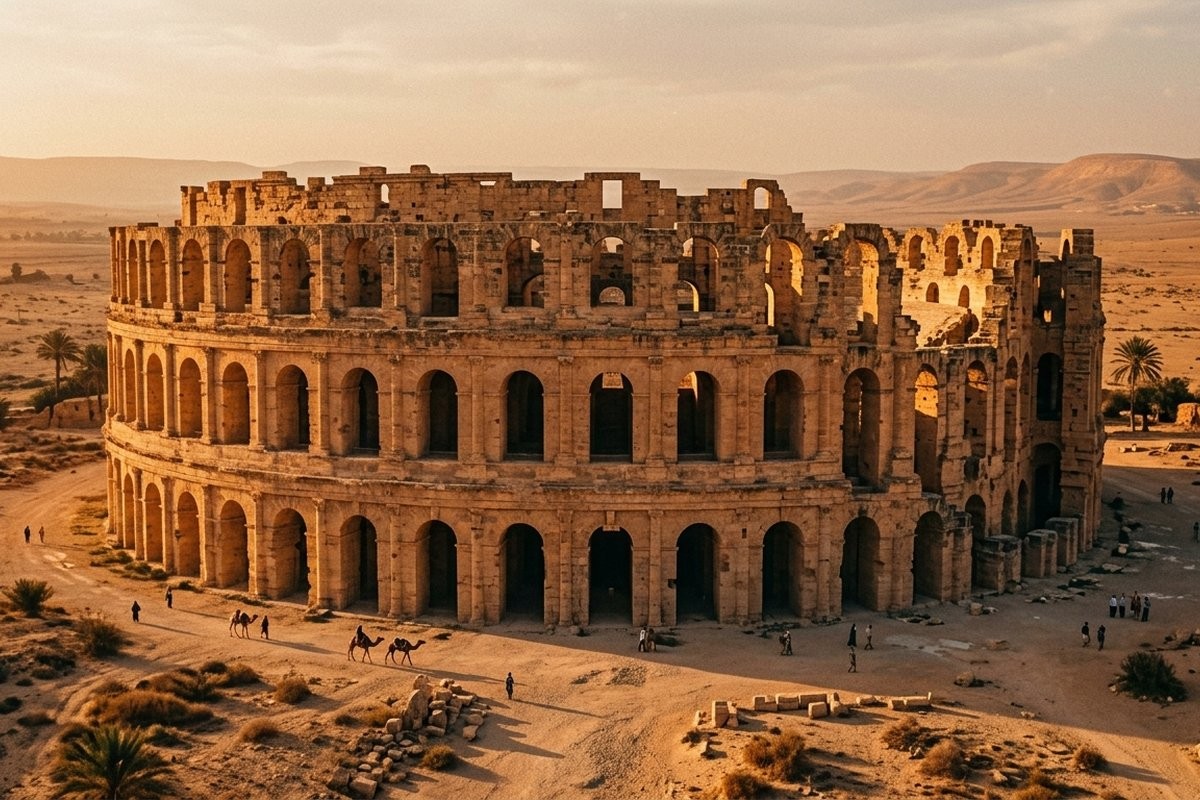
Perched 600 meters above sea level on the southern flank of the Teboursouk mountains, Dougga (ancient Thugga) was an indigenous Numidian hilltop capital that flourished into a major Roman provincial city. Because modern settlement shifted into the valley below, the ancient stone street grid, theaters, baths and temples remain remarkably intact.
The Roman Capitol and Forum
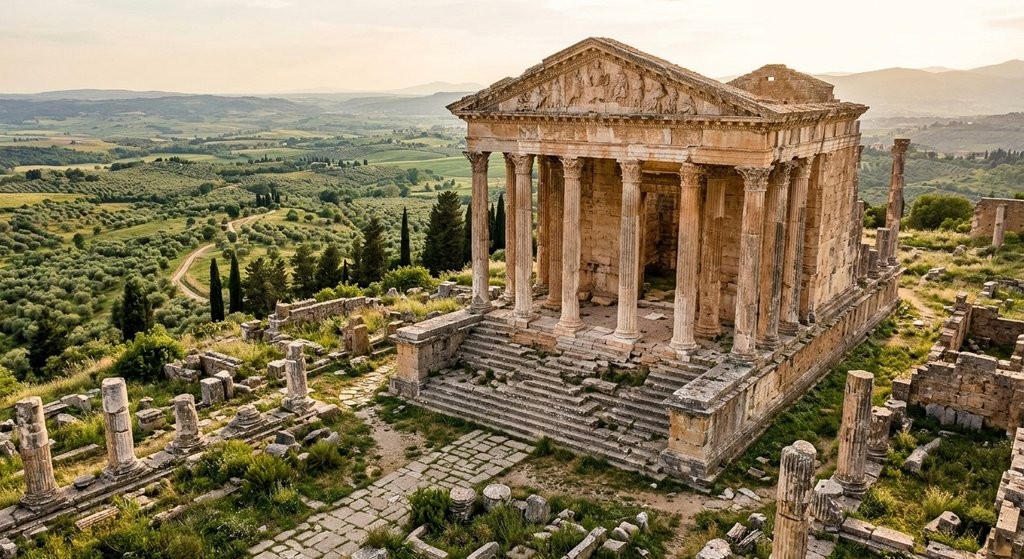
The most iconic monument at Dougga is the Capitol, built in 166 AD during the reign of Marcus Aurelius and Lucius Verus. Dedicated to Jupiter, Juno and Minerva, its six fluted Corinthian columns support a pediment depicting the apotheosis of Antoninus Pius carried to heaven by an eagle.
Step onto the forum plaza in front of the temple, where the paving stones still bear the original Latin inscriptions dedicating public structures funded by wealthy local citizens.
The Hillside Theater and Residential Villas
Built directly into the hillside in 168 AD, Dougga's Roman theater seated thirty-five hundred spectators and still offers sweeping views across olive groves toward the Oued Khalled valley. The stage wall retains its lower colonnade and original acoustic niches.
Below the forum, walk along paved Roman streets with ancient drainage channels to explore the House of the Trifolium and the Cyclops Baths, where private residential courtyards and mosaic-floored dining rooms reveal daily life on the African frontier.
Getting to Dougga from Tunis
From Tunis, take a shared taxi (louage) from the Gare Routière Nord (Bab Saadoun) to Teboursouk (about two hours). From the Teboursouk louage station, hire a local taxi for the remaining six kilometers up to the Dougga ticket gate, arranging for the driver to return for your pickup two hours later.